


At a glance
- Hospital discharge: usually on the same day as surgery.
- Shoulder sling: from a few days to several weeks, depending on the procedure.
- Initial recovery time: usually 1 to 6 weeks.
- Return to strenuous activity: approximately 1 to 3 months.
- Full recovery: usually within 1 to 3 months.
- Key factor: consistency with physiotherapy.
Shoulder arthroscopy is a minimally invasive technique: the surgeon works through two small 5 mm incisions, without opening the joint. This means less tissue trauma and, for most patients, a smoother and faster recovery compared with open surgery. See in detail the advantages of shoulder arthroscopy.
The most common question before and after surgery is simple: “When will I be better?” In this guide, we describe the recovery process divided into phases – week by week – so that you know what is normal at each stage and how to help your shoulder return to its normal function.
Important: no two operations are the same. The length of time you will wear the sling and the pace of the exercises depend on exactly what was repaired. A simple decompression for shoulder impingement syndrome or tendinitis follows a faster recovery course, while a repair for a shoulder tendon tear (rotator cuff tear), instability – dislocation or a SLAP lesion requires a longer period of protection. The timelines below are indicative. Your personalised programme will be provided by Dr Leonidou’s team.
Recovery phase by phase
Physiotherapy after arthroscopy follows a logical sequence: we begin with passive movements, progress to active-assisted movements and finish with active resistance exercises. In this way, the shoulder first regains its range of motion and then its strength, without placing premature strain on the operated area.
The first days: rest and protection
In most cases, you leave the hospital on the same day. If you have chosen awake shoulder surgery or another form of anaesthesia, the first few hours are usually pain-free thanks to regional anaesthesia.
- Sling: wear the sling provided to you according to the instructions.
- Ice therapy: apply ice locally during the first few days to reduce swelling and discomfort.
- Pain: usually mild or absent – simple oral painkillers are given preventively.
- Wound: the two small incisions are closed with adhesive strips, without sutures. Keep the area clean and dry as instructed.
- Gentle movements: move your elbow, wrist and fingers freely to help circulation.
Starting physiotherapy with passive movements
Physiotherapy usually begins a few days after surgery, with the team’s physiotherapist following a personalised protocol. At this stage, movements are mainly passive: the shoulder is moved gently without you applying force, so that the joint does not become stiff.
- The aim is to gradually maintain and increase the range of motion.
- Continue wearing the sling between exercises for as long as instructed.
- Avoid lifting weights or pulling objects with the operated arm.
Active-assisted movements
As the tissues heal, you progress to active-assisted movements: you begin moving the shoulder yourself, with the help of your other arm or the physiotherapist. Many patients gradually stop using the sling during this period – always according to the doctor’s instructions, especially if a tendon repair was performed.
- Gradual return to gentle, low-impact daily activities.
- Movement becomes freer and less painful.
- Consistency with your home exercises is what makes the difference.
Active movements and the beginning of strengthening
During this phase, the shoulder regains an increasingly greater range of motion and active mobilisation without assistance begins, together with the first strengthening exercises. Return to work usually takes place during this period – earlier for sedentary occupations and later for manual work.
- Gradual increase in function during daily activities.
- Controlled strengthening exercises begin under the guidance of the physiotherapist.
- Return to strenuous activity is usually expected within 1 – 3 months.
Resistance exercises and full function
The final phase focuses on active resistance exercises and functional rehabilitation, so that the shoulder regains full strength and endurance. For most patients, full recovery is achieved within 2 to 4 months, depending on the nature of the injury and consistency with the rehabilitation programme.
- Gradual and controlled return to sports activities.
- Completion of strengthening and consolidation of the gains made during rehabilitation.
- The exact timing of return to sports is always determined by the doctor.
The “secret” to a fast recovery
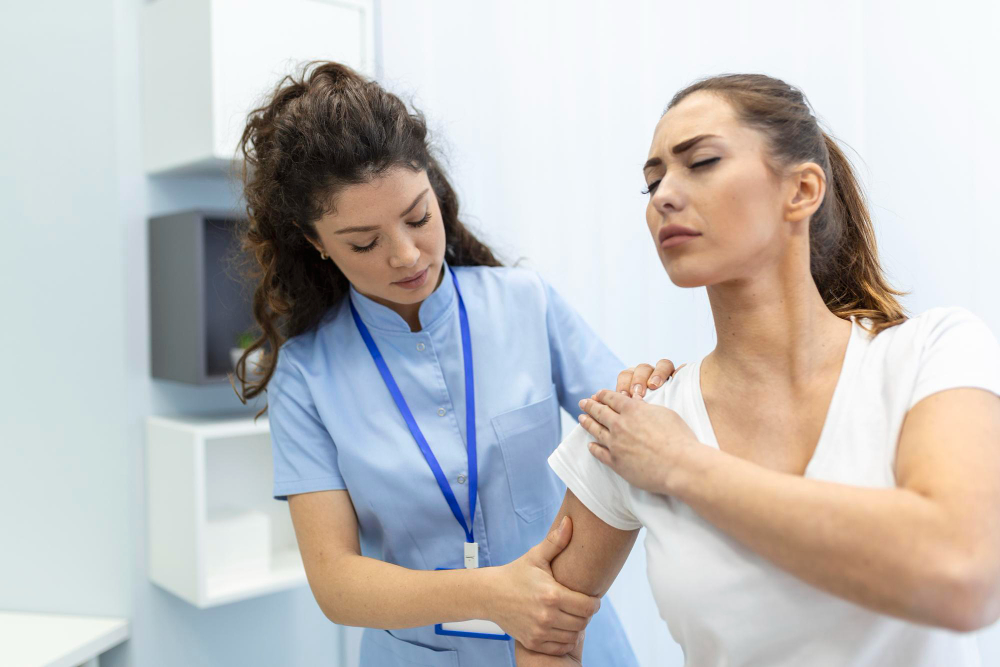
It is not a medication – it is consistency. Proper rehabilitation leads to rapid and successful recovery. Follow your home exercise programme carefully and do not skip physiotherapy sessions. You can view indicative exercises in the clinic’s video exercise programme, but always after receiving the “green light” from your physiotherapist.
Practical tips for home
Small adjustments to your daily routine make the first few weeks easier and protect your shoulder:
- Dressing: choose button-up clothing or loose-fitting T-shirts. Always begin dressing with the operated arm.
- Sleep: many patients rest better in a semi-upright position or with pillows supporting the arm, especially during the first few days.
- Ice therapy: apply ice as instructed to control swelling.
- Be patient with the sling: do not rush to stop using it earlier than your doctor has advised.
- Medication: take painkillers as prescribed.
When to contact the doctor
Complications after shoulder arthroscopy are rare (less than 4%). Nevertheless, contact the clinic if you notice:
- Fever, or increasing redness, warmth and discharge from the incisions (possible signs of infection).
- Severe pain that worsens or does not improve with painkillers.
- Significant and persistent stiffness that does not improve with physiotherapy.
- Any symptom that causes you concern.
How long does recovery take after shoulder arthroscopy?
Recovery time usually ranges from 1 to 6 weeks, while return to strenuous activity takes place approximately within 1 to 3 months. Full recovery is usually achieved within 2 to 4 months. The exact time depends on the extent of the injury and your consistency with physiotherapy.
How long will I wear the sling?
The length of time the sling is used varies depending on the findings during surgery and the severity of the injuries that were repaired – from a few days to several weeks. After tendon repair procedures, the sling is usually worn for longer in order to protect the repair. Follow your doctor’s instructions carefully.
Will I be in pain after surgery?
There is usually no significant postoperative pain, and simple oral painkillers are given preventively. Mild discomfort during the first few days is expected and is managed with ice therapy and painkillers. Pain gradually decreases as recovery progresses.
When does physiotherapy begin?
Physiotherapy is essential for successful recovery and usually begins a few days after surgery. A personalised protocol is followed: initially passive exercises, then active-assisted exercises and finally active resistance exercises, so that the shoulder regains its range of motion and strength.
When can I return to work and sports?
Return to work depends on the type of job – earlier for sedentary occupations and later for manual work. Return to strenuous or sporting activity usually takes place within 1 to 3 months and is gradual, always with the doctor’s approval.
How can I speed up my recovery?
The most important factor is consistency with the rehabilitation programme: regular physiotherapy, daily home exercises, correct use of the sling and ice therapy, and avoiding early strain on the shoulder. Proper rehabilitation leads to rapid and successful recovery.
